
There is no honest single number for how long a roof lasts in Portland. What there is: published life-expectancy estimates by material, which are averages from other places, and a set of local conditions that move a roof toward the short or the long end of them. This guide gives both, and the signs that say a roof is actually done.
Published life expectancies by material
Two sources publish roof life expectancies in years. Both are estimates of typical service life, not guarantees, and neither is specific to Oregon.
| Roofing material | NAHB / Bank of America study (2007) | InterNACHI estimated life chart |
|---|---|---|
| Asphalt shingles | about 20 years (one figure for all asphalt) | 20 years for 3-tab, 30 for architectural |
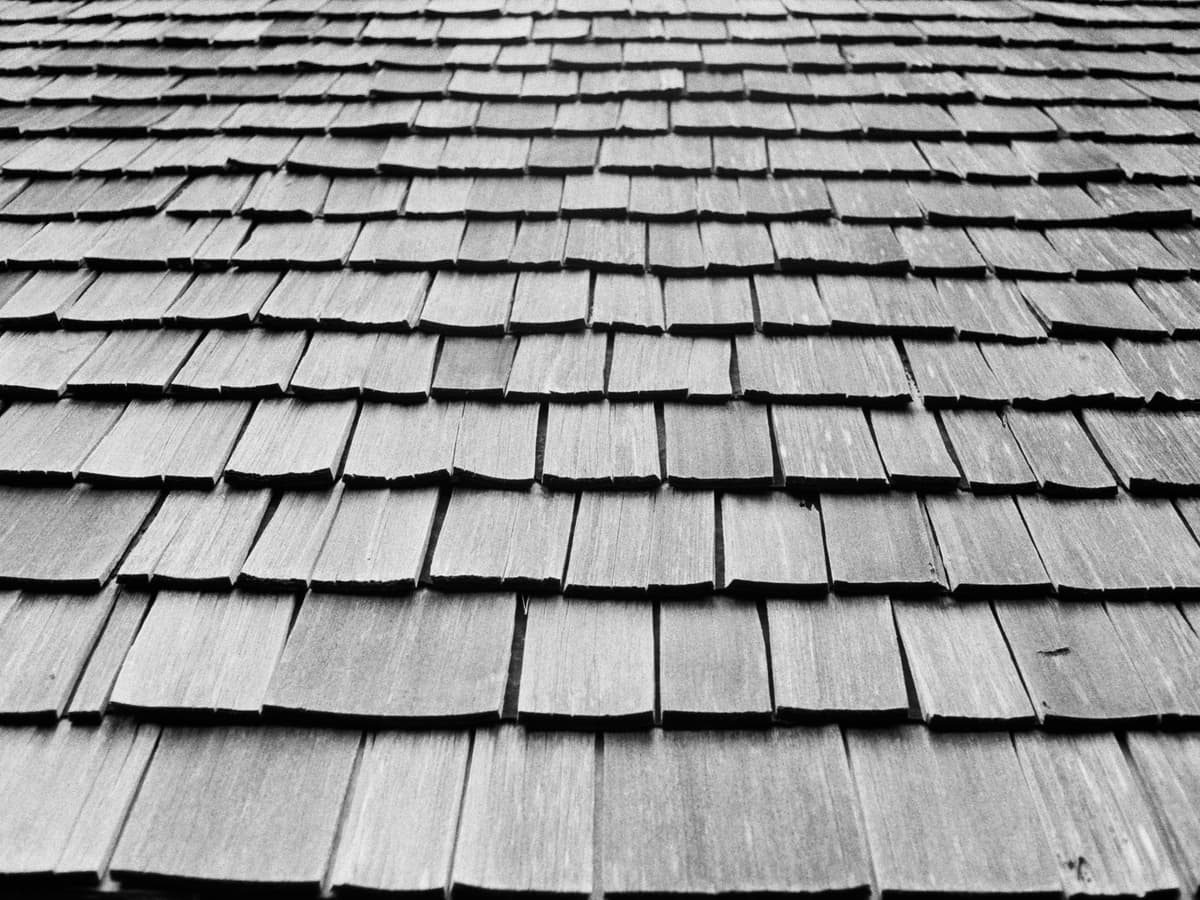
| Wood shakes or shingles | about 30 years | 25 years |
| Metal | not listed | 40 to 80 years |
| Modified bitumen (low-slope) | 20 years | 20 years |
| Slate | 50+ years | 60 to 150 years |
Sources: the National Association of Home Builders and Bank of America Study of Life Expectancy of Home Components (February 2007), and InterNACHI’s Standard Estimated Life Expectancy Chart for Homes. Both checked October 4, 2026. InterNACHI itself notes that a roof’s life depends on local weather, design, material quality and maintenance. Wood roofs have a guide of their own: cedar shake roofs in Portland. For the difference between the two asphalt rows, see architectural vs 3-tab shingles.
Why Portland roofs wear the way they do
Long, steady rain. The 1991-2020 climate normals for Portland International Airport from NOAA average 36.92 inches of precipitation a year, with measurable precipitation on about 157 days. Water is on the roof for weeks at a time from November to January, the wettest months, so any weak joint gets found.
Shade, moss and debris. Much of the metro is under firs and maples. Oregon State University Extension names shade and moisture as what moss needs, and notes that moss holds water against the roof and lifts shingle edges. Needles and leaves pack valleys and the uphill side of chimneys, where water then backs up under the shingles. The Lake Oswego page covers roofs under heavy canopy.
Wind and ice. East wind out of the Columbia River Gorge breaks the seal between shingle courses, and ice storms bring limbs down. See missing shingles for what that damage looks like.
The attic underneath. A poorly vented attic, or a bath fan that ends in it, keeps the underside of the deck damp in winter. A roof can look fine from the street while the sheathing under it softens. The roof ventilation guide covers how an attic should be vented.
How it was put on. A roof laid over an old one, or with reused flashing, starts its life with the weak points of the last one.
Signs a roof is reaching the end
- Tabs curling or cupping across the roof, not just in one spot
- Dark or shiny patches where the granules have worn off, and grit in the gutters
- Shingles that crack instead of bending, or keep blowing off in ordinary storms
- Leaks in more than one place, or coming back after repairs
- A roofline or deck that has started to dip; see sagging roof
One of these on its own often means a repair. Several together usually mean a replacement. The repair-or-replace guide goes through the decision, and the cost page has published price ranges for both.
A warranty is not a lifespan
Shingles are sold with long warranty terms, and a number of years on the wrapper is easy to read as a promise of how long the roof will last. It is not. The warranty covers defects in the material on the maker’s terms, and the roofer’s workmanship warranty is a separate document. Read both, and judge the roof itself by its condition.
The simplest way to know where your roof stands is to have the roof and the attic looked at. Request a free roof inspection and a written quote.
This page is general information, not professional advice about your specific situation. Have it assessed by a qualified professional before making decisions. Last reviewed October 4, 2026.